The draft arrives. The page looks considered, the wording sounds polished, and you can see your business in it. Then comes the question: are you ready to approve the copy?
“I like it” is useful feedback, but approval needs something more concrete. The words describe your offer, set expectations and ask a visitor to act. You need to know whether they say the right things, whether the business can stand behind them, and what still needs resolving.
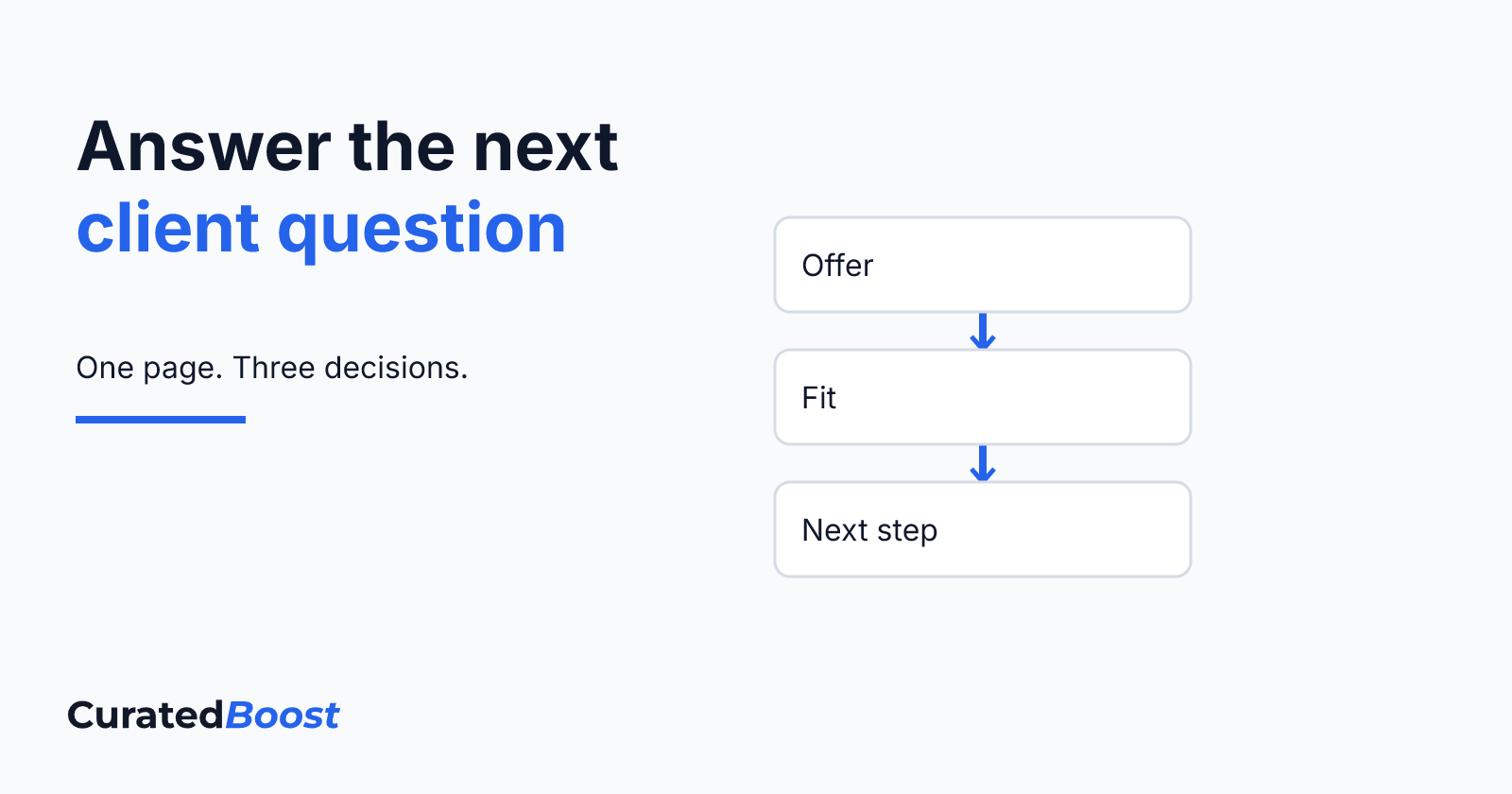
For an owner-led service business, a useful review follows five questions: Does this answer the reader's question? Is the offer accurate and specific? Is the next step clear? Does the meaning survive on a phone? Can the team act on your feedback?
You do not need to become a copywriter. You do need a clear way to check the business information and make decisions about it.
Start with the page's job
Before changing individual sentences, write down who the page is for and what they need to understand. A service page might help an owner decide whether a planning engagement fits their situation. A contact page might explain how to make a useful inquiry and what happens after it.
Keep that purpose beside the draft. Ask someone who understands your audience to read the opening without your explanation. What do they think the service is? Who do they think it helps? What would they expect to find next?
Their answer is a small review observation, not proof that every visitor will understand. Use it to find gaps worth discussing. If the opening could describe almost any business, name the service, situation or decision more clearly before polishing the tone.
Review the page in order. A heading should prepare the reader for the section beneath it. Details that answer a basic fit question should be easy to find where the reader needs them.
Check the offer against what you actually deliver
Read every description of the service as a business commitment. What is included? What is outside the agreed scope? Which details depend on an assessment, proposal or separate arrangement?
Look closely at broad words such as “complete,” “ongoing” and “included.” They may be appropriate, but the reader needs enough detail to understand what they mean here. A description of the work should distinguish an activity from the useful output the client receives.
Then check the facts: service names, delivery arrangements, locations, qualifications, costs where stated, and any availability or timing claims. Ask the person responsible to confirm the current source. If a fact is unsettled, leave it visibly unconfirmed in the review rather than filling the gap with a plausible answer.
Apply the same care to proof. Use testimonials, client names, examples and results only when their accuracy, context and permission are confirmed. A fictional example can help explain a process, provided it is clearly identified as fictional. It should not look like a real client result.
Try one paragraph with a fictional example
Imagine a fictional consultant whose service page says:
We deliver a complete transformation package with ongoing support.
That sentence leaves several decisions open. What work takes place? What will the client receive? What does “ongoing” cover?
Suppose the fictional agreement actually covers a planning conversation and a written action plan. A more specific draft could say:
We review your current process in a planning conversation and provide a written action plan. Any later implementation or support is agreed separately.
The revised version gives the reviewer something to check. Is the conversation part of this offer? Is an action plan supplied? Is the separate-work boundary correct? It is not a promise that this wording will improve inquiries; it is a clearer statement of this fictional scope.
Use this approach on one important paragraph in your own draft. Replace an unclear phrase with a concrete activity, output or boundary, then have the business owner confirm it.
Follow the next step beyond the button
Read the call to action and the explanation around it together. Does the button describe the action the visitor will take? Does the surrounding copy explain what happens afterward?
A request for a quote, an inquiry and a confirmed booking are different actions. If someone submits an inquiry, do not imply that an appointment or price is already confirmed. Describe the actual next step and who handles it. Include response arrangements only when the business has agreed and can maintain them.
Open the destination in the review environment. Check whether its heading, form instructions and confirmation message tell the same story. A service page that promises a short inquiry should not lead to an unexplained application process.
Record a mismatch as a specific issue. For example: “The service page says request a quote, but the destination says book a confirmed appointment. Please confirm the intended action and align both.” Testing the full form's operation is a separate check; this pass checks whether the words make consistent promises.
Read the page on a phone
Use the actual page preview when one is available. A document alone cannot show how a heading wraps, where a paragraph sits, or whether a button label remains clear in the layout.
Read the headings without the body copy. Can you follow the outline? Then read the paragraphs and actions in context. Look for long blocks that hide an important qualification, repeated introductions that delay the answer, or phrases that need an explanation your visitor will not have.
Shorten where it improves understanding. Keep the detail needed to make a fair decision, including relevant limits. Removing every qualification can make the copy brief while changing its meaning.
Check that link and button wording identifies a useful destination or action. Read labels beside the fields they explain. This is a practical content review on a phone; it does not replace broader accessibility, responsive-layout or functional testing.
Give feedback the writer can use
“Make this stronger” leaves the next decision with the writer. A useful review comment identifies the location, the reader's problem, the requested change and the information needed to make it.
For example:
Service page, opening paragraph: an owner cannot tell whether implementation is included. Please name the planning output and add the agreed implementation boundary. I will confirm that boundary against the proposal.
Separate a factual correction from a preference. “This qualification is no longer current” needs a source correction. “I prefer a warmer opening” needs a discussion about tone. A missing business decision may need the owner before the writer can revise anything.
Bring comments into one agreed review copy where practical. Resolve conflicting instructions, name who confirms outstanding facts, and identify the exact version you approve. Keep unresolved items visible with an owner and next action. Approval should describe the reviewed scope rather than imply that every future change has been accepted.
A short approval checklist
Before approving the copy, confirm that:
- The page answers a defined reader question and explains who the offer fits.
- Service descriptions match the agreed work, outputs and relevant boundaries.
- Business facts and public proof have a confirmed source and permission where needed.
- The call to action, destination and follow-up wording describe the same journey.
- The meaning stays clear in the page preview on a phone and a larger screen.
- Comments are resolved, or remaining items have an owner and next action.
- The approval names the version and the content it covers.
Start with one important page. Review it for meaning and accuracy, record the gaps, and then refine the wording. That gives you and your website partner a concrete basis for approval.
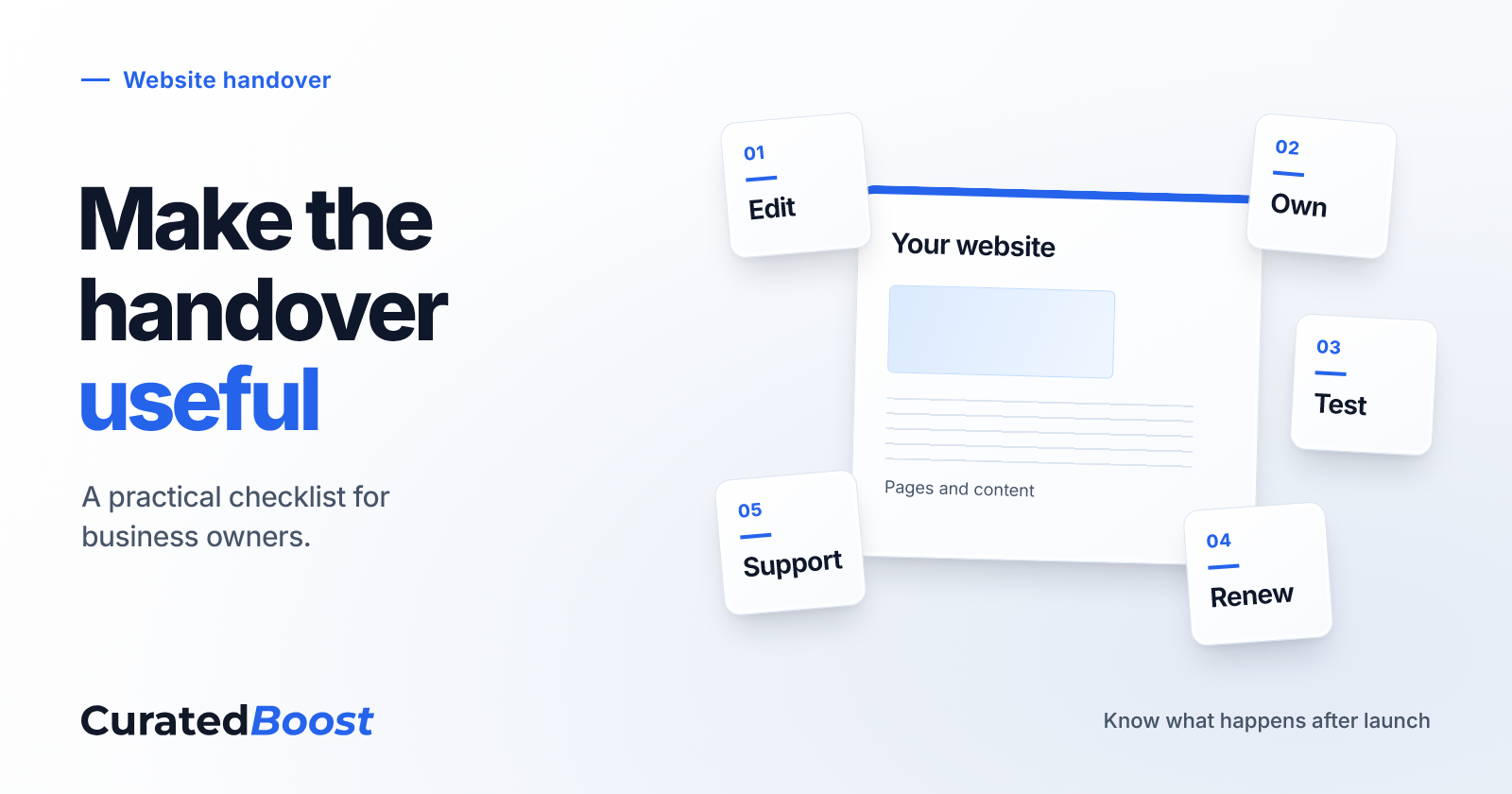
For related preparation, see the service-page questions guide, the seven-question content brief and the website handover checklist.
Shem
Founder of CuratedBoost. Strategy, design, and growth for small teams who want calm, confident momentum.